

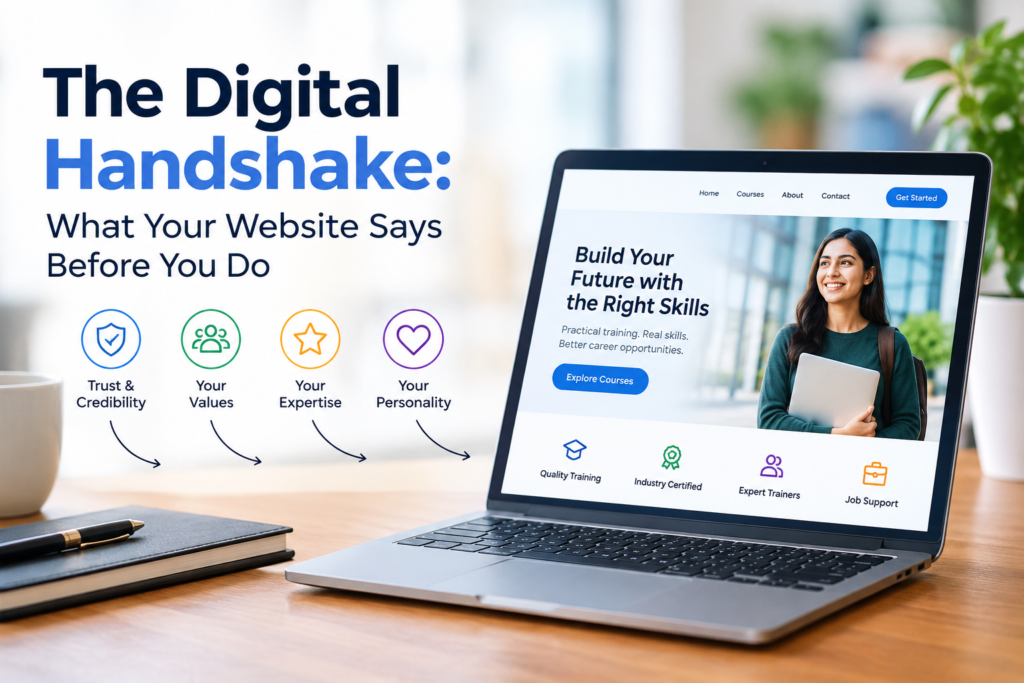


Website first impressions can make or break your business online. Whether potential customers are searching from Sydney, Melbourne, Brisbane, Perth, Adelaide, Canberra, Hobart, or Darwin, they begin judging your website within milliseconds of landing on it. Long before they read your headline, service list, or a single word of copy, they’ve already decided whether your business looks trustworthy and professional. Research out of Carleton University found that people form a reliable opinion of a website’s visual appeal in just 50 milliseconds, faster than the eye can consciously process a sentence. Customers judge your site based on its layout, colours, and overall design, and everything they read afterwards is influenced by that first impression.
For a business paying to drive traffic to that page, this is the most expensive fraction of a second in marketing.
The 50-Millisecond Verdict: How Fast Buying Decisions Really Happen
The original study, later covered by Nature, found that visual appeal judgments made in 50 milliseconds correlated closely with judgments made after much longer, considered viewing. The snap verdict isn’t a rough guess that gets corrected once someone actually reads the page it sticks. Lindgaard’s team called this the halo effect: a good first impression makes readers more forgiving of everything that follows, while a bad one makes them look for reasons to leave, no matter how strong the content underneath actually is.
This is why a business can have excellent services, fair pricing and genuine expertise, and still lose the sale. Our own post on why every business needs a professional website covers the same underlying problem from the brand-credibility side.
What Customers Judge Before They Read a Single Word

1. Layout and Whitespace
A cluttered, cramped layout reads as untrustworthy in under a second, regardless of what the clutter actually contains. Clean structure and breathing room signal competence before any text is parsed.
2. Colour and Contrast
Mismatched or dated colour palettes are one of the fastest-processed visual cues. A modern, consistent palette is read almost instantly as “current” and “professional” a decade-old scheme reads as the opposite.
3. Load Speed and First Paint
If there’s nothing to look at within the first second, there’s no first impression to win. Slow first paint burns the exact window the 50-millisecond research describes. Our web design and development service is built around performance from the first pixel, not just the finished page.
4. Mobile Rendering
Most first impressions now happen on a phone. A layout that was designed for desktop and merely shrinks awkwardly on mobile fails the snap-judgment test before a visitor even scrolls.
5. Imagery Quality
Generic stock photography is processed as generic in the same instant it reads as “template” rather than “this specific business.” Custom or well-chosen imagery earns a beat more attention before judgment locks in.
6. Font Choice and Hierarchy
Clear heading hierarchy tells the eye where to look before it reads anything; inconsistent or overly decorative type slows that process down and reads as amateur, even on a well-built site.
7. Above-the-Fold Clarity
If a visitor can’t tell what the business does within the visible area before scrolling, the visual judgment has nothing coherent to attach to. This is one of the most common issues we fix during an ecommerce website redesign.
The Halo Effect: Why a Bad First Impression Poisons Everything After It
This is the part most businesses underestimate. The halo effect doesn’t just cost you the first few seconds it recolours how every later element is read. The same paragraph of copy, the same price, the same testimonial will be judged more favourably on a site that won the 50-millisecond test and less favourably on one that didn’t. Website first impressions set the frame customers use to judge everything you say next, whether or not they ever consciously notice it.
How Much Revenue This Costs You
| Monthly Website Visitors | Cost per Click (avg.) | Wasted Spend if 40% Bounce on First Impression | Potential Extra Enquiries With a Redesign |
| 2,000 | $3.50 | ≈ $2,800/month | 15–25 more enquiries/month |
| 5,000 | $3.50 | ≈ $7,000/month | 35–60 more enquiries/month |
| 10,000 | $3.50 | ≈ $14,000/month | 70–120 more enquiries/month |
A visitor who bounces in the first second because of a weak first impression has still cost you the full click. On paid traffic, that’s not a missed opportunity it’s spend you’ve already paid for and received nothing back on.
How to Win the 50-Millisecond Test
| What Customers Judge Instantly | How to Fix It |
| Cluttered layout | Simplify to one clear message and one primary action above the fold |
| Dated colour palette | Refresh to a modern, consistent brand palette |
| Slow first paint | Optimise performance image weight, hosting, caching |
| Poor mobile rendering | Design and test mobile-first, not desktop-shrunk |
| Generic stock imagery | Use custom photography or purpose-built graphics |
| Unclear above-the-fold message | State what you do and for whom in the first screen |
City-by-City: Where First Impressions Cost the Most
Paid traffic costs and competitive density change how expensive a weak first impression really is:
- Sydney the highest cost-per-click market in the country, so every bounced first impression is the most expensive.
- Melbourne dense agency competition means a dated design is judged against genuinely current alternatives.
- Brisbane fast-growing service sectors where new entrants often out-design established incumbents.
- Perth trades and resources-sector sites often carry the highest revenue-per-lead, raising the stakes of a weak first impression.
- Adelaide smaller traffic volumes make each lost first impression proportionally more costly.
- Canberra government and professional-services visitors judge credibility on sight before reading a compliance claim.
See our full locations page for services available in your city.
Frequently Asked Questions
Is it really possible to judge a website in 50 milliseconds?
Yes — this is a peer-reviewed finding from Carleton University, later reported by Nature, and it has been replicated in follow-up usability research since.
Does great content make up for a weak first impression?
Rarely, because the halo effect means the same content is read more critically once the visual first impression is negative. Fixing the design usually has to come first.
What’s the fastest way to test our own first impression?
Show your homepage to someone outside the business for five seconds and ask what they think you do and whether they’d trust it. If they hesitate, a visitor scrolling past in a search results page will too.
What should we check before a redesign?
Start with the checklist in this article, then compare it against current best practice in our Top Web Development Trends for 2026 post.
The Bottom Line
Website first impressions decide the sale before a customer reads a single word the verdict is visual, and it happens in the time it takes to blink. Get a free quote and we’ll audit exactly where your site is losing that first-impression test.