

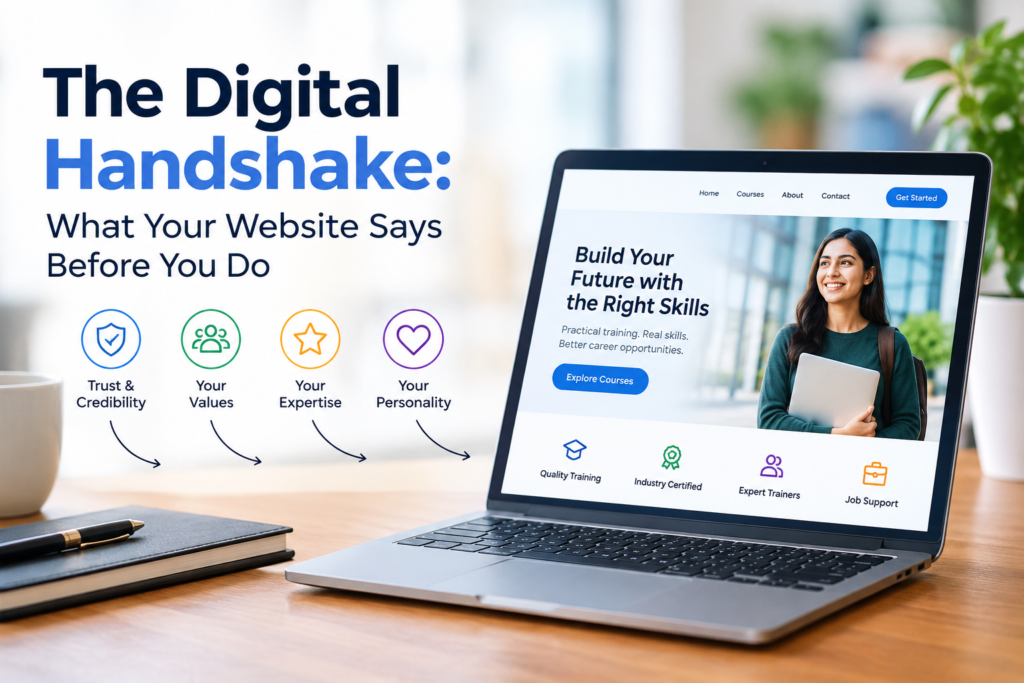

Website trust signals decide who wins the sale far more often than most business owners want to admit. You can offer the better product, the sharper price and the more talented team, and still lose the job to a competitor who simply looks like the safer bet.
That stings, but it isn’t random. When people spend money, they aren’t really hunting for the best option. They’re trying not to regret the one they pick. A customer who chooses you is taking a risk with their money, their time and sometimes their reputation at work.
This guide explains why customers buy the safest choice instead of the best business, which website trust signals calm that fear, and what you can fix this month. It’s written for Australian business owners, marketers and ecommerce managers, whether you’re in Sydney, Melbourne, Brisbane, Perth, Adelaide or Canberra.
The Best Business Rarely Wins. The Safest One Does.
Behavioural economists have a name for what’s happening here: loss aversion. In plain English, the pain of a bad decision feels bigger than the pleasure of a good one. So buyers lean towards the choice that’s hardest to blame them for.
There’s an old line in corporate buying that nobody gets fired for choosing the big, familiar supplier. It applies to small purchases too. Hiring a plumber, booking a dentist, ordering from an online store you’ve never heard of: in each case the buyer is quietly asking, “what if this goes wrong?”
Your website is where that question gets answered, usually in under a minute and usually without you in the room. That’s why website trust signals matter more than clever copy or a flashy hero image. They’re the visible evidence that choosing you is a safe decision.
What a Cautious Customer Actually Looks For
Put yourself in their shoes. They land on your page from Google, probably after comparing three or four businesses. They aren’t reading every word. They’re scanning for reasons to relax or reasons to leave. In those first few seconds they’re asking:
- Does this look real and established?
- Can I see proof that other people were happy?
- Do I know what this will cost and what happens next?
- Will a human answer if something goes wrong?
- Is my payment and personal information safe?
Every one of those questions has a website answer, and website trust signals are how you give it. Miss one and the customer won’t complain. They’ll just click back and choose someone else.
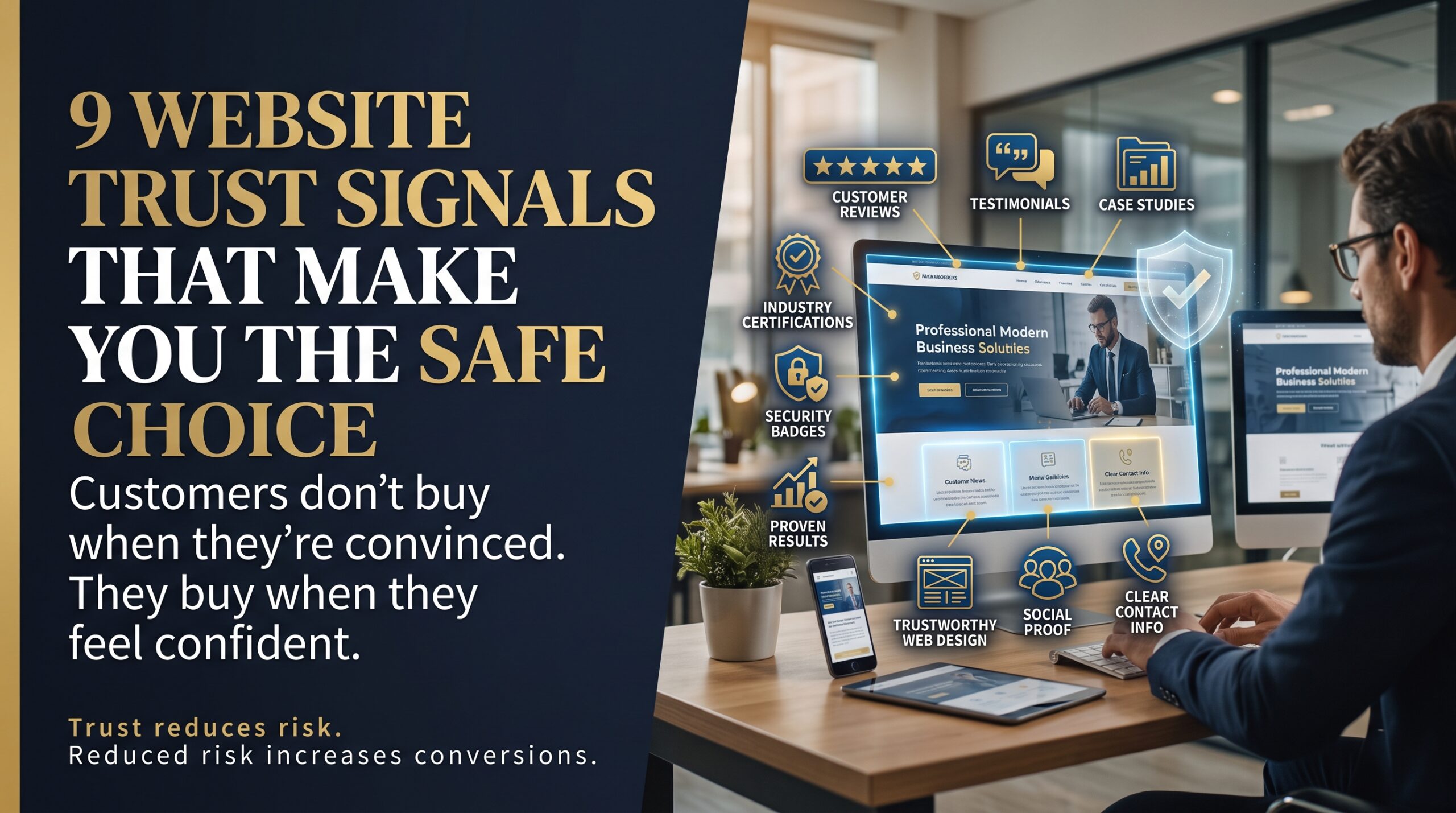
9 Website Trust Signals That Make You the Safe Choice
1. Fast, stable and secure pages
A slow, glitchy site feels like a slow, glitchy business. Make sure every page loads over HTTPS, nothing jumps around while it loads and key pages respond quickly. Google’s Core Web Vitals give you measurable targets for speed and stability. A well-built WordPress website with clean code is usually the easiest place to start.
2. Real proof, not vague praise
“Great service!” signed “J.” proves very little. Named reviews, short case studies with real outcomes and customer logos used with permission do the heavy lifting. Put them near the buttons people hesitate over, not buried on a testimonials page nobody visits.
3. Clear pricing and a clear process
People fear surprise bills more than they fear a fair price. Even a “from $X” range or a simple three-step process (enquire, quote, deliver) removes a huge amount of uncertainty. When prices are completely hidden, buyers assume the worst.
4. Real people, a real address and an ABN
Show who you are. Add team photos, a proper About page, a visible phone number, a street address and your ABN. Australian buyers like dealing with Australian businesses, and being upfront about prices and policies keeps you in step with Australian Consumer Law, which the ACCC explains in plain language.
5. A mobile experience that just works
Most first visits happen on a phone. If buttons are fiddly or text is tiny, trust drops straight away. If your store feels dated on mobile, an ecommerce website redesign often pays for itself in recovered sales.
6. Easy, human contact options
Click-to-call buttons, a short contact form, a live chat and a promise like “we reply within one business day” all say the same thing: you won’t be ignored if something goes wrong. Make sure the promise is one you keep.
7. Risk reversal
Guarantees, easy returns, free quotes and no-obligation audits shift the risk from the buyer to you. That’s one of the strongest website trust signals there is, because it tells customers you’re confident enough to carry some of the downside.
8. Consistent, professional design
Mismatched fonts, stretched images and obvious stock photos make a business feel temporary. Consistency reads as reliability. This is where thoughtful web design and development pays off: the site looks like one coherent brand, not a patchwork.
9. Transparent policies and a secure checkout
Shipping times, returns, privacy and payment options should be easy to find before anyone reaches the cart. Research from the Baymard Institute on checkout usability is worth reading if you run an online store. Whether you build on WooCommerce or Shopify, a calm, predictable checkout is one of the most important website trust signals you can offer.
Why the Best Business Loses: Five Costly Mistakes
- Hiding behind jargon. If a buyer has to decode your offer, they’ll pick the business they understand.
- Looking like everyone else. A generic template makes you easy to forget and easy to doubt.
- Making visitors dig for proof. Evidence that sits three clicks deep might as well not exist.
- Ignoring how Google judges trust. Google’s guidance on helpful content puts experience, expertise, authoritativeness and trust at the centre of quality.
- Treating the site as a brochure. A website that ignores website trust signals and doesn’t guide people towards a safe next step quietly loses enquiries every day.
How Australian Businesses Can Build Website Trust Signals Locally
Local credibility is one of the most underrated website trust signals. A Brisbane tradie, a Perth online retailer and a Canberra consultancy all benefit from showing local phone numbers, local suburbs, local reviews and clear service areas. If you’d like a team to help, our location pages cover Sydney, Melbourne, Brisbane, Perth, Adelaide or Canberra, and the full list is on the locations page.
Smaller businesses can start with small business website development focused on speed, proof and clear contact options. Online stores should also look at ecommerce SEO, because visibility without trust just sends people to a page that doesn’t convert. Pairing design with web design and SEO helps both parts of the journey work together.
You can see the full range of web development services if you’d like to know what a build could include.
A 30-Day Website Trust Signals Checklist
You don’t need a rebuild to start. Work through this over a month:
- Week 1: Test your speed and security. Run your key pages through a speed test and confirm HTTPS works everywhere.
- Week 1: Check mobile. Use your own phone to enquire or buy. Note every point of friction.
- Week 2: Gather proof. Collect five named reviews and one short case study, then place them next to your main buttons.
- Week 3: Clarify the offer. Add a price range or a simple three-step process and rewrite jargon into plain English.
- Week 3: Show the humans. Add team photos, your address, phone number and ABN.
- Week 4: Add risk reversal. Offer a guarantee, a free quote or a no-obligation audit, and make policies easy to find.
Website Trust Signals FAQs
What are website trust signals?
They’re the elements on a website that reassure visitors a business is genuine and safe to deal with. Examples include reviews, case studies, secure checkout, clear policies, real contact details and fast, stable pages.
Do trust signals affect Google rankings?
Google doesn’t publish a single “trust score”, but its quality guidance places trust at the core of how it evaluates content. Trust-building also lifts enquiries and sales from the traffic you already have, which is valuable either way.
How long does it take to see results?
Changes like better proof, clearer pricing and faster pages can change visitor behaviour within weeks. Ranking improvements usually take longer and depend on your market.
Do small businesses need website trust signals?
Yes, and often more than large brands do. Big names borrow trust from familiarity. Smaller businesses have to earn it on the page. The FAQs page covers common questions about web projects.
How much does a trust-focused website cost?
It depends on size, features and goals. A free quote is the quickest way to get a figure that fits your situation.
Final Thoughts: Be the Business That Feels Safe to Choose
Being the best matters. But being the best isn’t enough if buyers can’t see it, test it or trust it. Website trust signals turn quality into confidence, and confidence is what actually closes the sale.
Pick one signal from this article and fix it this week. If you’d like a hand, get a free quote or call 1300 649 299. You can also read more about us or browse the blogs for more ideas.